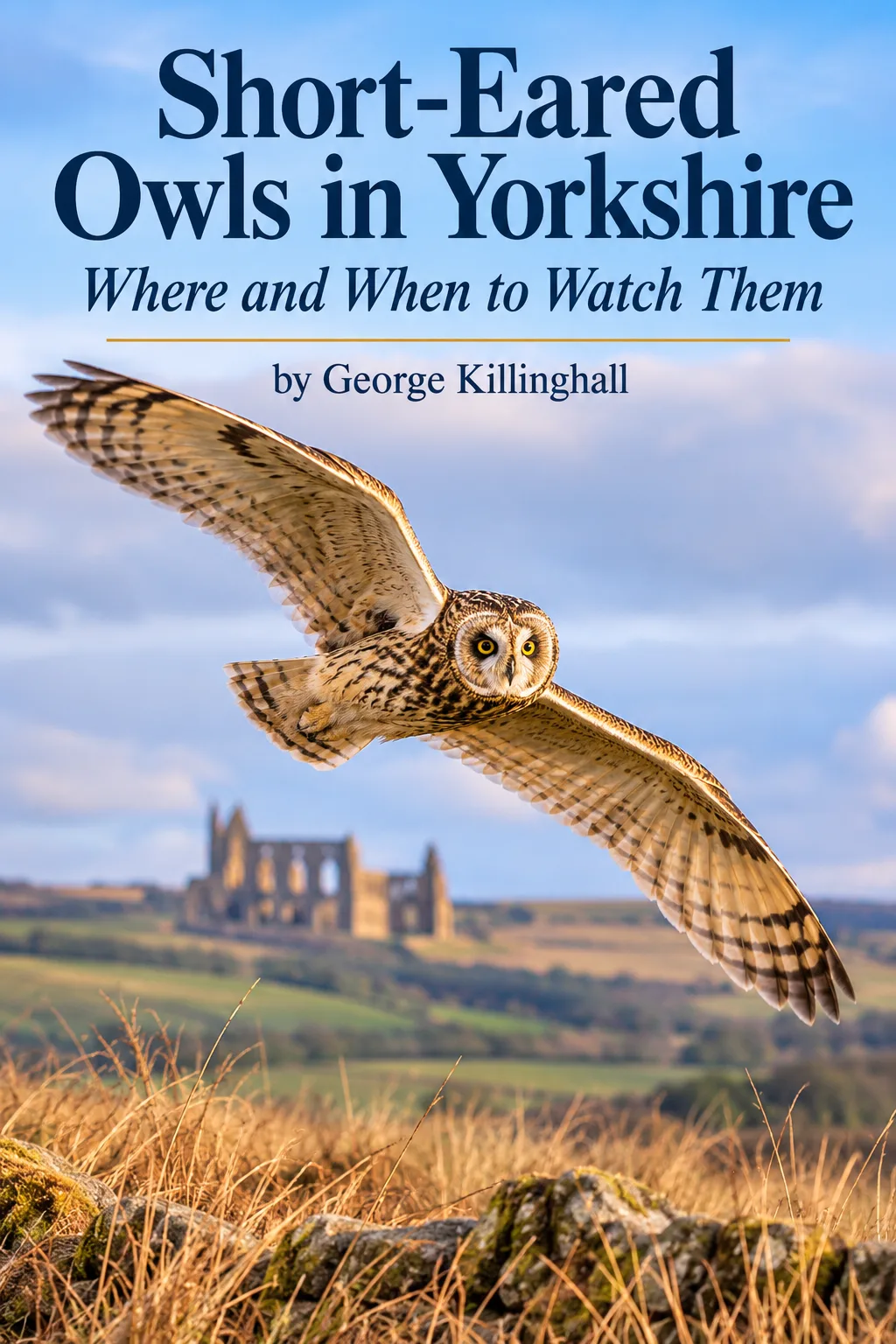
Yorkshire is one of the best places in England to enjoy the spectacular sight of short-eared owls hunting over open countryside. With their distinctive yellow eyes, beautifully mottled plumage and wonderfully buoyant flight, these fascinating birds are a favourite among birdwatchers and wildlife photographers.
Unlike many owls, short-eared owls are often active during daylight, particularly in the late afternoon and early evening. This makes them an exciting species to look for, even if you are not an experienced birdwatcher.
Getting to Know the Short-Eared Owl
The short-eared owl (Asio flammeus) is a medium-sized owl with long wings, a rounded head and striking yellow eyes. Its brown, buff and cream-coloured feathers provide excellent camouflage against rough grassland and open moorland.
Despite their name, their ear tufts are extremely small and are often difficult to see. They are not actually ears, but small feathers on the top of the head.
One of the most remarkable things about these owls is their hunting technique. They fly low over grassland, often hovering briefly before dropping suddenly onto an unsuspecting vole or other small mammal. Watching one quartering a field, turning effortlessly into the wind before making a sudden dive, is an unforgettable experience.
Where to Look for Short-Eared Owls in Yorkshire
Yorkshire offers a variety of habitats that can attract short-eared owls, particularly areas of open grassland, moorland, coastal marshes and rough agricultural land.
The Yorkshire coast
The coastal landscape provides some excellent opportunities for watching birds of prey. Areas around Spurn Point, Kilnsea and the Humber Estuary are worth exploring, particularly during autumn and winter migration periods.
The Humber Estuary
The extensive marshes and surrounding farmland provide suitable habitat for hunting owls. Look over rough grassland and open fields, especially where there are plenty of small mammals.
The North York Moors
The wide expanses of open moorland and surrounding rough grassland can offer suitable habitat. The quieter edges of the moors and adjoining farmland are particularly worth investigating.
The Yorkshire Wolds
Although perhaps better known for their rolling agricultural landscapes, the Wolds and surrounding countryside can also provide opportunities to encounter hunting short-eared owls, particularly where suitable rough grassland remains.
Remember that owl sightings are never guaranteed. These are wild birds, and their movements depend on food availability, weather and seasonal conditions.
The Best Time of Year to See Them
Short-eared owls can be seen in Yorkshire throughout the year, although their numbers and distribution vary.
Autumn and winter are particularly exciting periods for birdwatchers, as birds from northern Europe may move into Britain. Some years produce particularly good numbers, while others are quieter.
Winter afternoons can be especially rewarding. On a clear day, arriving a couple of hours before sunset gives you a good opportunity to watch the surrounding countryside and wait for an owl to emerge.
The best conditions are often dry, relatively calm days with good visibility. However, these adaptable hunters can also be active in less favourable weather.
Tips for Watching and Photographing Short-Eared Owls
Patience is essential when looking for short-eared owls. Rather than constantly moving between locations, find a suitable vantage point and spend some time scanning the surrounding fields.
A pair of binoculars is invaluable. Look for a large, pale bird flying low over the vegetation, with slow, flexible wingbeats and occasional gliding movements.
For photographers, a telephoto lens is useful, but it is important not to get too close. Allow the owl to behave naturally and avoid approaching it when it is hunting or resting.
Some useful tips include:
- Arrive before the late-afternoon light begins to fade.
- Scan rough grassland, marshes and open fields.
- Watch for movement close to the ground.
- Look for birds hovering or dropping suddenly into vegetation.
- Wear muted clothing and keep noise to a minimum.
- Avoid disturbing birds, particularly if they are feeding or roosting.
A responsible birdwatcher always puts the welfare of the bird before getting a photograph.
The Magic of a Yorkshire Winter Afternoon
There is something particularly special about watching a short-eared owl hunting over the Yorkshire countryside. The low winter sun catches its pale underwings, illuminating the intricate patterns of its feathers as it moves silently across the landscape.
Sometimes an owl will appear suddenly from behind a hedge or rise from a patch of rough grassland. At other times, you might spend an hour watching an empty field before being rewarded with a brief but spectacular appearance.
That unpredictability is part of the attraction.
You do not need expensive equipment or specialist knowledge to enjoy the experience. A warm coat, binoculars, a little patience and an appreciation of the natural world are often all that is required.
Respecting These Wonderful Birds
Short-eared owls are sensitive to disturbance, especially when breeding or resting. Keep your distance, remain on public footpaths and never approach a suspected nest or roosting site.
Avoid repeatedly following an owl to obtain photographs, and do not share precise locations of vulnerable nesting birds publicly.
By watching responsibly, we can help ensure that future generations of birdwatchers continue to enjoy these remarkable hunters.
Yorkshire's varied landscapes provide a wonderful setting for discovering short-eared owls. Whether you are an experienced wildlife photographer or simply someone who enjoys spending time outdoors, seeing one of these beautiful birds hunting over an open field is an experience well worth seeking out.
So, next time you find yourself exploring the Yorkshire countryside on a crisp winter afternoon, keep your eyes on the fields. You never know when a short-eared owl might appear.
Recommended Yorkshire locations to add to your birdwatching itinerary
Three particularly worthwhile places to investigate are:
- Flamborough Cliffs – Short-eared owls are recorded around the clifftop fields.
- Welwick Saltmarsh – A good area to explore for wintering owls.
- Spurn Point – A well-known migration hotspot, with short-eared owls among its autumn visitors.
For current sightings, check the Spurn Bird Observatory reports before travelling.
Reader Comments
Leave a Comment or a Book Review
We would love to hear your thoughts on this chapter, or even a complete book review.