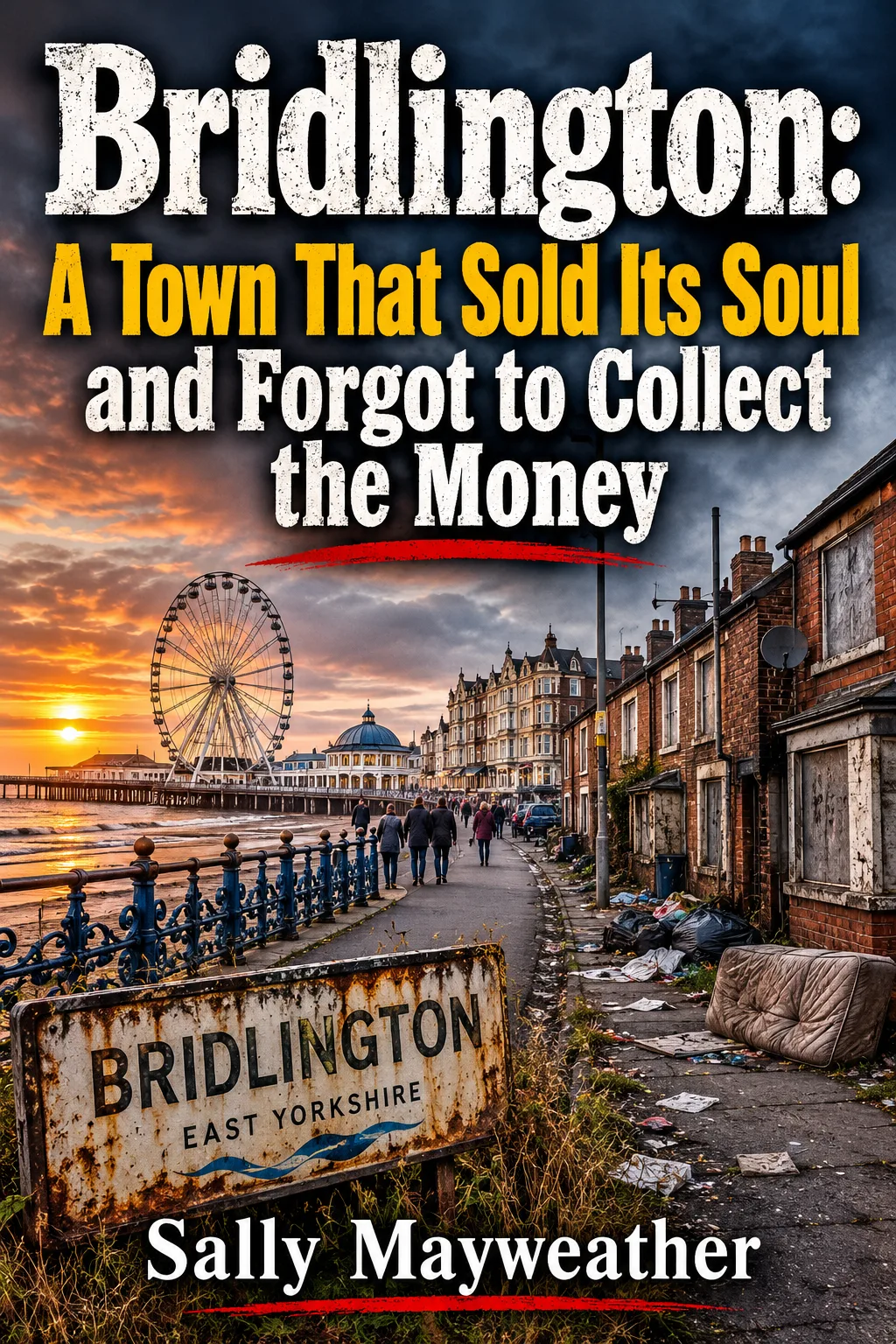
Bridlington used to be proper. Victorian promenades, families in their Sunday best, boats bringing in the best lobsters in Europe. People came for the air and the feeling that somewhere in this country still worked. That version is long gone. What’s left feels like a town that gave up and then decided to lean into the failure.
Five minutes off the front and the postcard dies. Streets with toilets and fridges dumped on the pavement like someone just stopped caring mid-move. Gardens full of dog shit and rubbish that has been there so long the maggots have claimed squatters’ rights. One road got the nickname Death Row because people keep dying on it from the drugs. Not as a joke. Because it fits. Locals say it without irony.
Dealers treat the place like a franchise. Crack and heroin moving in supermarket bags. Kids of twelve running the gear because a tracksuit matters more than anything else on offer. One bloke got his teeth knocked out for trying to help a neighbour. Another describes the nightly soundtrack: doors slamming, shouting, fights, people coming and going at all hours while the tenant is nowhere to be seen. The council slaps closure orders on houses. The problem just shifts two doors down. It is not subtle.
This is not abstract “deprivation.” Bridlington South sits among the worst bits of England on the official tables. Child poverty is high. The fishing that used to put real money in pockets has withered. What replaced it is takeaways, cheap flats carved out of old guesthouses, and a steady supply of people who have been failed by every system that was meant to catch them. When a bag of heroin costs a fiver and a pint is the same price, the choice starts looking rational to some. That is the bit that should make people uncomfortable.
The moral bit is worse. Open dealing in daylight. Residents too scared of what might happen if they speak up with their names attached. Fly-tipping left for months because no one expects it to be cleared. Antisocial behaviour that has become the background hum of the place. Tourists still come for the beach and the lobster and mostly stay on the front. The people who live here get the rest of it.
There are the usual official answers. Multi-agency schemes. Arrests that clear one set of dealers so the next lot can move in. Volunteers doing the work the state will not. All necessary. None of it enough. The deeper problem is that standards slipped and then stayed slipped. Pride thinned out. The quiet decision was made that some places were no longer worth the effort. Bridlington is living with the result.
It is not unique. It is just honest about it. The seafront still puts on a show. Behind it sits a town that stopped believing it could be better, and a street culture that proves the point every day. One local said the best thing about Bridlington now is the road out. For the people still stuck there, the decline is not a headline. It is just Tuesday.
Reader Comments
Leave a Comment or a Book Review
We would love to hear your thoughts on this chapter, or even a complete book review.